![End to End logo dark landscape cropped-01.png]](https://26925870.hs-sites-eu1.com/hs-fs/hubfs/End%20to%20End%20logo%20dark%20landscape%20cropped-01.png?height=40&name=End%20to%20End%20logo%20dark%20landscape%20cropped-01.png)
Key Points: Actual Size Calculation for Glass in Sash
1. Understanding information used for the calculation.
The system uses 3 key details for actual glass size calculation in all types of sashes, for example, sliding, casement, door:
a. Glass sightline - calculated by DrawingBoard using overall frame sizes and sectional details configured.
b. Glazing rebate width - set on the default value page. The system uses 5 defaults based on drawing details. This value is the amount taken off from sash stile to accommodate glass unit and tolerance.


c. Glazing tolerance - set on the default value page, providing 4 defaults. This value is the gap between glazing rebate and edge of glass unit on one side of the glass.

2. Understanding calculation of actual glass size.
Glass hidden in rebate is calculated from glazing rebate width and glazing tolerance:
Glass Hidden in Rebate = Glazing Rebate Width - Glazing Tolerance

Using these details the actual sizes for the glass is calculated as follows:
Glass Actual Width = (Sightline Width + Glass Hidden in Rebate) x 2
Key Points: Actual Size Calculation for Direct Glazed Units
1. Understanding information used for the calculation.
The system uses 4 key details for the actual glass size calculation for direct glazed units (DirGUs):


b. Glass sightline - calculated by DrawingBoard as follows:
Sightline Width = (Overall Frame Width - 2) x (Profiled Frame Jamb + DirGu Stop Size)

c. Glazing rebate width - set on the default value page. The system uses 5 defaults based on drawing details.

d. Glazing tolerance - set on the default value page, providing 4 defaults. This value is the gap between glazing rebate and edge of glass unit on one side of the glass.

2. Understanding calculation of actual glass size.
Glass hidden in rebate is calculated from glazing rebate width and glazing tolerance:
Glass Hidden in Rebate = Glazing Rebate Width - Glazing Tolerance

Using these details the actual sizes for the glass is calculated as follows:
Glass Actual Width = (Sightline Width + Glass Hidden in Rebate) x 2
Key Points: Rails for Direct Glazed Units
1. DirGU edge touching a rail.
Direct glazed units can also have top and bottom rails. If an edge of a DirGU touches a rail, for that edge, the system will use sash rebate and tolerance.
2. DirGU edge touching the frame.
Direct glazed units can also have top and bottom rails. If the edge of a DirGU touches the frame, not a rail, the system will use DirGU rebate and tolerance.

Key Points: Glazing Bars (GB)
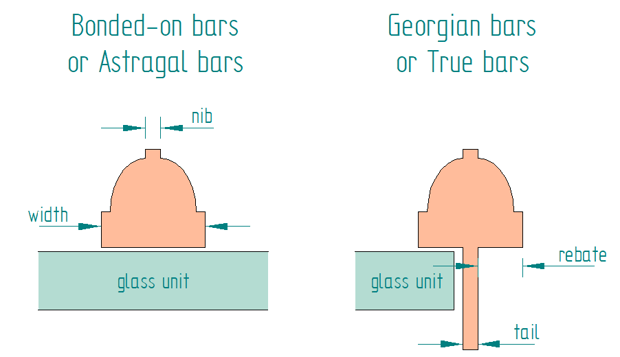
| Single Glazing | Double / Triple Glazing | |
| Bonded-on Bars | Rare, mainly used with laminated glass | Most common for sealed units |
| Georgian Bars | Traditional window manufacturing | Individual sealed units, called heritage units in integrate |
1. Bonded-on or Astragal Bars.
Bonded-on bars do not affect glass sizes.
2. Georgian or True Bars.
When actual sizes are calculated for individual glass units, the system checks all 4 edges of the glass (top, left, bottom, right).
If an edge is touching the sash (stile, head, bottom rail) - the system calculates glass hidden in rebate as per actual size calculation for glass in sash section above.
If an edge is touching a Georgian glazing bar - this is calculated as follows:
GB Glazing Rebate Width = GB Width - Tail / 2
If the glazing tolerance around the 4 edges of the glass is the same - This is calculated as follows:
Glass Hidden in Rebate = GB Glazing Rebate Width - Glazing Tolerance
Note: This means, that the system may add different amount to the 4 sides of the glass depending on the Georgian glazing bar details.